
 Posted by
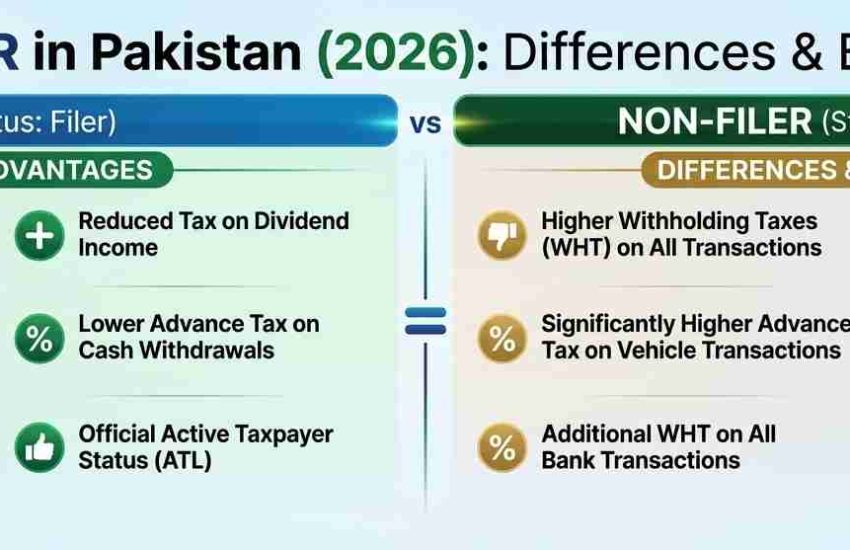
 The gap between a filer vs non-filer in Pakistan has never been wider. In 2026, non-filers pay double, sometimes triple the tax on property, vehicles, banking, and dividends, and face growing restrictions on everyday transactions.
This guide explains the difference between a filer and non-filer, the exact rate gaps, and why becoming a filer usually pays for itself many times over.
What Is the Difference Between a Filer and Non-Filer?
A filer is a taxpayer whose name appears on FBR’s Active Taxpayer List (ATL) because they have filed their income tax return for the relevant year. A non-filer is anyone who is not on the ATL either they never filed, or they filed late.
The difference isn’t just paperwork. Filer status determines how much withholding tax you pay on nearly every major financial transaction and, increasingly, whether you’re allowed to make that transaction at all.
Key point: having an NTN or having tax deducted from your salary does not make you a filer. You are only a filer once you file your return and appear on the ATL.
Filer vs Non-Filer Tax Rates 2026 (At a Glance)
Here’s how non-filer tax rates compare with filer rates on common transactions. Rates are indicative for 2025–26 and several are tiered by amount or property value always confirm the current figure with FBR.
| Transaction | Filer | Non-Filer |
| Cash withdrawal over Rs 50,000/day (231A) | 0% | ~0.6–0.8% |
| Property purchase (236K) | ~3% | up to ~10–12% |
| Property sale (236C) | lower rate | ~2× higher |
| Vehicle registration (231B) | lower rate | often ~2× |
| Profit on bank deposits (151) | ~15% | ~35% |
| Dividend income (150) | 15% | 30% |
| Prize bond winnings (156) | 15% | 30% |
| Foreign card payments (236Y) | 1% | 2% |
Bottom line: across almost every category, non-filers pay roughly double. On a single large property or investment, that gap alone can run into hundreds of thousands of rupees.
Non-Filer Tax Rates: Real Examples
Property
On property, the gap is largest. A filer buying property pays advance tax at around 3%, while a non-filer can pay several times more on the same purchase. On a Rs 1 crore property, that difference alone can exceed several lakh rupees.
Bank Profit & Cash Withdrawals
Profit on savings and deposits is taxed at roughly 15% for filers but around 35% for non-filers. And non-filers pay withholding tax on daily cash withdrawals above Rs 50,000, while filers pay nothing on that.
Dividends & Investments
Dividend income is taxed at 15% for filers and 30% for non-filers. On Rs 200,000 of annual dividends, a filer pays about Rs 30,000 while a non-filer pays about Rs 60,000 double, every year.
Vehicles
Non-filers pay significantly higher advance tax when registering or transferring a vehicle, and higher token tax in many cases close to double the filer rate.
Beyond Higher Taxes: Restrictions Non-Filers Face in 2026
The 2026 crackdown goes further than higher rates. Non-filers now face real limits:
- Property & vehicle restrictions: under the Finance Act 2025–26, non-filers face restrictions on buying immovable property above a certain value and on purchasing vehicles.
- No refunds: non-filers cannot claim back excess withholding tax that was deducted during the year. Filers can.
- Banking limits: non-filers are flagged in the banking system and can face higher deductions and tighter account conditions.
- Audit & enforcement: FBR uses NADRA, property, and bank data to identify non-filers who should be filing enforcement is more active in 2026.
- Penalties: if you fall within the mandatory filing criteria and don’t file, you risk penalties and notices.
Benefits of Being a Filer in Pakistan
The benefits of being a filer add up quickly. The main filer benefits in Pakistan include:
- Lower withholding tax on property, vehicles, banking, dividends, and prize bonds roughly half of non-filer rates.
- Refund of excess tax: if more tax was withheld than you owed, you can claim it back by filing.
- Freedom to transact: buy property and vehicles without non-filer restrictions.
- Lower cost of investing: keep more of your dividends and savings profit.
- Business credibility: banks, clients, and partners often check filer status before dealing with you.
- Avoid penalties & audit risk: stay compliant and off FBR’s enforcement radar.
Even with zero taxable income, filing is worth it. Filer status lowers your withholding tax on transactions regardless of your income level, so you save money even if you owe no income tax at all.
Is It Worth Filing If My Income Is Below the Taxable Limit?
Yes. Filing keeps you on the ATL, which means lower tax on banking, property, and vehicles and the ability to reclaim any tax already deducted.
For most people, the annual saving far outweighs the small effort of filing. Remember: filer status is individual, if your spouse buys property or withdraws cash, they need their own NTN and their own return to get filer rates.
How to Become a Filer
Becoming a filer is simpler than most people think: register for an NTN, file your income tax return, and your name is added to the ATL.
For the full step-by-step, read our guides on how to become a filer in Pakistan and how to file your income tax return.
Frequently Asked Questions
Q: What is the main difference between a filer and non-filer?
A filer is on FBR’s Active Taxpayer List because they filed their return; a non-filer is not. Filers pay much lower withholding tax on most transactions and can claim refunds, while non-filers pay higher rates and face restrictions.
Q: How much more tax do non-filers pay?
Across most categories, non-filers pay roughly double the filer rate for example dividends at 30% vs 15%, and much higher advance tax on property and vehicles. The exact gap depends on the transaction and current Finance Act rates.
Q: Does having an NTN make me a filer?
No. An NTN registers you in the tax system, but you only become a filer once you file your income tax return and appear on the ATL.
Q: Is it worth becoming a filer if I earn below the taxable limit?
Yes. Filer status lowers your withholding tax on banking, property, and vehicles regardless of income, and lets you reclaim excess tax deducted, so you usually save money even with no tax liability.
Q: Can my spouse use my filer status?
No. Filer status is individual. Each person must have their own NTN and file their own return to benefit from filer rates.
Q: What happens if I file late?
Late filers are treated as non-filers until they appear on the ATL, and must pay an ATL surcharge (Rs 25,000 for individuals in 2026) to be included. Filing on time avoids this entirely.
Become a Filer and Stop Overpaying
Every year you stay a non-filer, you quietly overpay tax on almost everything you buy and earn. JZARR Filers (Karachi) makes switching simple, we handle your NTN registration, Income tax return, and ATL status end to end so you start saving at filer rates.
Book your free consultation today and become a filer without the hassle.